报告题目:Reaction and Reactor Engineering Intricacies in Bio-Gas Upgradation
报 告 人: Joris Thybaut
时 间:2026年5月29日(周五)9:00-11:30
地 点:会议中心二层报告厅
报告人简介:
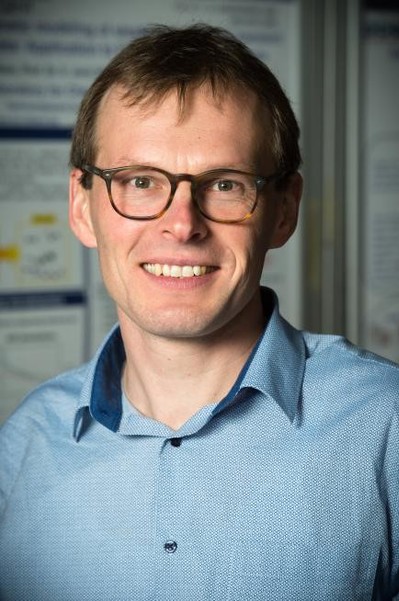
Prof. Joris Thybaut is a Full Professor in Catalytic Reaction Engineering (CaRE) within the Laboratory for Chemical Technology at Ghent University since 2014 where he serves the executive committee. He also directs the Chemical Engineering and Materials Sciences program committee in the Faculty of Engineering and Architecture.
Joris has published over 250 papers in peer reviewed journals and has (co-)authored 4 books.His research activities evidence a steady evolution from more classical refining reactions to renewables valorisation and circularity, typically involving heterogeneous catalysis and complex reaction networks, either at gas or liquid phase conditions. The common denominator in his research projects is the development of an elementary understanding of the occurring phenomena, be it experimentally or via the construction of (micro)kinetic models. Joris has published over 250 papers in peer reviewed journals and has (co-)authored 4 books.
报告摘要:
Circularity essentially relies on conversion schemes involving renewable (or circular) resources such as biomass (or waste plastics). Particularly bio-gas, produced from organic waste, is gaining popularity. The latter waste is not limited to agricultural residues, but also includes, e.g., the excess sludge from domestic waste water treatment plants, i.e., a biomass resource from which the availability increases with the population density!
Bio-gas itself, mainly consisting of methane (CH4 ±60%) and carbon dioxide (CO2 ±40%) is, at present, mainly exploited calorifically. Yet, its chemical transformation into high-value chemicals or Sustainable Avaiation Fuels holds significant promise. The latter is the topic of the OBIWAN project, i.e., an initiative supported by the InterReg France-Wallonia-Flanders program, in which a diverse team addresses the various challenges involved. These range from ensuring high-quality bio-gas production, over bio-gas purification and separation to chemical transformations of methane into hydrogen and solid carbon as well as to carbon dioxide hydrogenation into methanol.
The present communication will focus on hydrogen production from methane via pyrolysis over carbon catalysts in an ElectroThermal Fluidized Bed (ETFB) reactor. From the available hydrogen production technologies, methane pyrolysis, leading to so-called turquoise hydrogen, constitutes a promising combination of avoiding emissions without excessive associated costs. Carbonaceous materials are ideally suited for this purpose, allowing to efficiently deal with coke formation. The active carbon’s surface area proved to be a crucial descriptor for its activity and, more importantly, stability. A corresponding, innovative reactor technology for this highly endothermic reaction is the novel ElectroThermal Fluidized Bed reactor (ETFB). It seamlessly allows integrating renewable electricity in the valorization of bio-gas within the carbon circularity challenge. Adequate ETFB reactor models are essential tools for reliably predicting performances and designing corresponding processes.